










Watching your baby transition from a stationary sitter to an active explorer is one of the most rewarding experiences of early parenthood. While it often feels as though these milestones happen in the blink of an eye, the journey toward those first independent steps is a gradual process built on physical strength and self-assurance. Every child follows a unique developmental timeline, and the most effective way to support them is by providing ample opportunities for movement-based play.
The Foundation of Mobility: Maximizing Tummy Time
Developing the core strength necessary for walking begins long before a baby ever stands up. Tummy time is a fundamental exercise that helps infants build the essential muscles in their neck, back, shoulders, and arms. These muscle groups provide the stability required for sitting, crawling, and eventually pulling themselves into a standing position.
To make this practice more engaging, try placing a favorite toy just beyond your baby’s reach to encourage stretching. Engaging with them on their level by lying on the floor can also make the experience more social and enjoyable. Short, frequent sessions throughout the day are often more effective than one long period, as they help build endurance without causing overexertion.
Fostering Coordination Through Crawling and Floor Play
Before a baby can walk, they often master the art of crawling, which is a vital stage for developing balance and bilateral coordination. There is no single “correct” way to crawl; some babies may scoot on their bottoms or use a “commando” style, all of which are perfectly normal ways to explore their environment.
Creating a safe, open space on the floor allows your baby to navigate their surroundings freely. By placing interesting objects around the room, you encourage them to reach, pivot, and move their bodies in new ways. This type of unstructured floor play is one of the most natural methods for strengthening the muscles needed for more upright movements.
Supporting the Transition to Pulling Up
As your baby grows stronger, they will likely begin using furniture to pull themselves into a standing position. Providing a stable environment is crucial during this stage. Low, heavy furniture—such as a sturdy sofa—offers a secure base for them to grip as they test their weight on their legs.
It is important to supervise these moments to ensure that furniture is secure and cannot tip over. You may notice that while your baby is thrilled to be standing, they might not yet know how to safely sit back down. Offering gentle physical guidance and verbal encouragement helps them learn how to navigate the transition from standing back to the floor with confidence.
Engaging in Upright Play and Games
If your child seems comfortable standing with support, you can introduce simple games to challenge their balance. Placing a toy on a low table or the edge of a couch encourages them to maintain a standing position while focusing on an activity. This helps shift their weight and builds the stabilizer muscles in their ankles and legs.
Interactive play, such as sitting a short distance away and encouraging them to reach for you, can also be beneficial. The goal is to keep these interactions lighthearted and stress-free. When movement is treated as a fun part of the daily routine rather than a structured practice session, babies are often more motivated to experiment with their new skills.
Prioritizing Natural Foot Development and Safety
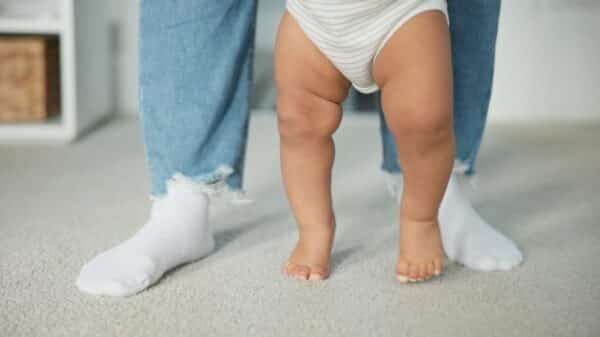
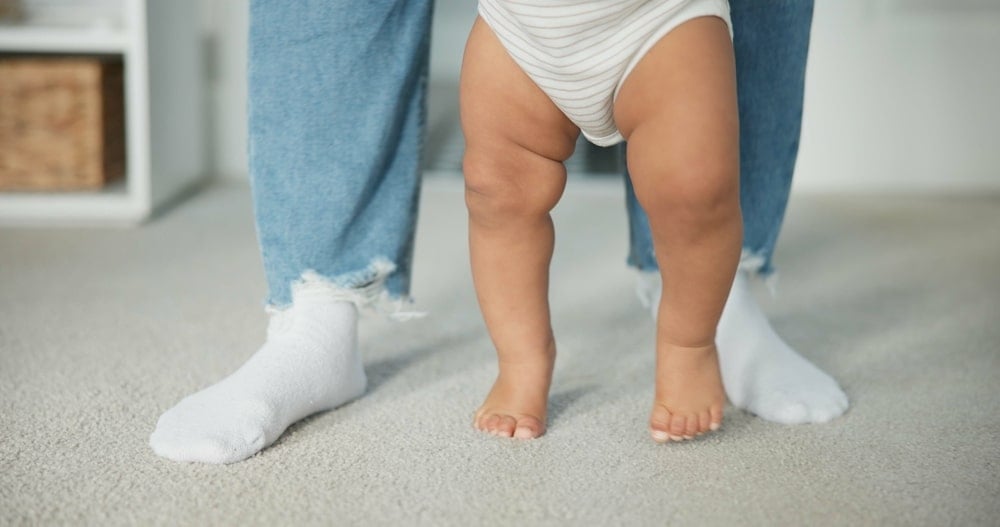
When it comes to learning how to balance, barefoot is often best indoors. Allowing a baby to feel the floor beneath their feet helps them develop sensory awareness and grip, which are essential for stability. When you are outdoors and shoes are necessary, look for flexible, well-fitted footwear that protects the feet without restricting natural movement.
It is worth noting that seated baby walkers are generally discouraged by experts. These devices do not actually teach a child the balance required for independent walking and can sometimes lead to developmental delays or safety hazards. Natural floor-based movement remains the safest and most effective way for a baby to gain the strength they need.
Respecting the Individual Pace of Development
It is natural for parents to compare their child’s progress with that of other children. However, the window for reaching milestones like standing and walking is quite broad. Some infants may be walking before their first birthday, while others may not take their first steps until several months later. Both ends of the spectrum are typically considered part of healthy development.
Focusing on your own child’s incremental progress rather than a specific calendar date can reduce unnecessary pressure. If you ever have specific concerns regarding your baby’s physical development or mobility, consulting with a healthcare professional can provide you with personalized reassurance and guidance.
Navigating Milestones with Patience and Care
The path to walking is rarely a straight line; it involves plenty of wobbles, minor tumbles, and repeated attempts. These small setbacks are actually part of the learning process, helping your baby understand gravity and balance. By maintaining a safe environment and offering plenty of encouragement, you give them the tools they need to succeed.
If you feel your child is struggling to meet certain physical milestones, seeking advice from a pediatric physiotherapist can be a proactive step. They can offer specific exercises and tailored support to help your little one reach their full potential. Before long, your baby will be navigating their world with ease, and the early days of “pulling up” will be a cherished memory.
Summary of Supporting Your Baby’s First Steps
Supporting a baby’s journey toward walking is about providing a safe, encouraging environment that prioritizes natural movement. By focusing on foundational activities like tummy time, allowing for barefoot exploration, and avoiding restrictive walkers, you empower your child to build strength at their own pace. Remember that every wobble is a sign of progress, and your role as a supportive observer is the most important part of their developmental journey.