






Two decades ago, my journey into motherhood began with a budget for baby gear that could realistically be described as “nonexistent.” We relied heavily on hand-me-downs, carefully curated gift registries, and endless inventive solutions to everyday problems. Looking back, I appreciate that lack of funds forced us into resourcefulness, teaching me early on that much of what the baby industry labels as “essential” is far from it.
After years of parenting wisdom and an abundance of parenting articles, I can confidently say this: you don’t need most of what social media and advertising suggest you do. In fact, buying most items brand new is entirely unnecessary.
If you’ve ever sat with frustration while gazing at racks filled with slightly worn holiday pajamas at a consignment shop, you understand the overwhelming waste we’re grappling with. We are suffocating under a mountain of barely-used baby gear while being pressured to buy more.
The real cost of “cheap and new”
Let’s dissect what’s truly happening in the landscape of baby products at the moment. The Consumer Product Safety Commission recently pulled over 15,000 baby products sold on Amazon—including brands with names like BBWOO, Greatale, and KEAWIS. These aren’t reputable companies; they often lack customer service and adhere to shockingly sparse safety regulations.
On top of that, raising a child from birth to age 18 now averages between $297,674 and $322,427, depending on various factors. For many families, purchasing everything new isn’t just unrealistic; it’s financially unattainable, masquerading as a so-called parenting standard.
The kicker? Almost 17 million tons of textile waste were reported in a single year—2018, to be specific. As Marianna Sachse, founder of Jackalo, the first circular childrenswear brand, emphasizes, “In the U.S., 85% of all textiles enter landfills, with less than 1% being recycled. Many assume that outgrown children’s clothes can be donated, but poor quality often makes them unusable, leading to disposal.”
What you actually need to buy new
Dr. Laura Steelman, a pediatrician with Bluebird Kids Health, speaks plainly about essential purchases: “Never buy used car seats. They may have been in an accident that the prior owner didn’t deem significant, but that could have compromised the seat’s integrity.”
Additionally, Dr. Steelman recommends buying mattresses new—not only crib mattresses, but any mattress—due to their propensity for harboring bedbugs and scabies, which are difficult to eliminate once established. No thanks.
Aside from car seats and mattresses, the list of must-have new items is shorter than you might think. Cribs produced before 2011 don’t meet modern safety standards, so always verify the manufacturing date if considering a hand-me-down. Bike helmets and breast pumps (unless designated for multiple users) should also be freshly purchased. However, renting breast pumps is a viable option if you only need one temporarily.
That’s pretty much the end of the “new only” list. Everything else? Fair game for secondhand shopping, provided you take sensible precautions.
Where secondhand actually makes sense
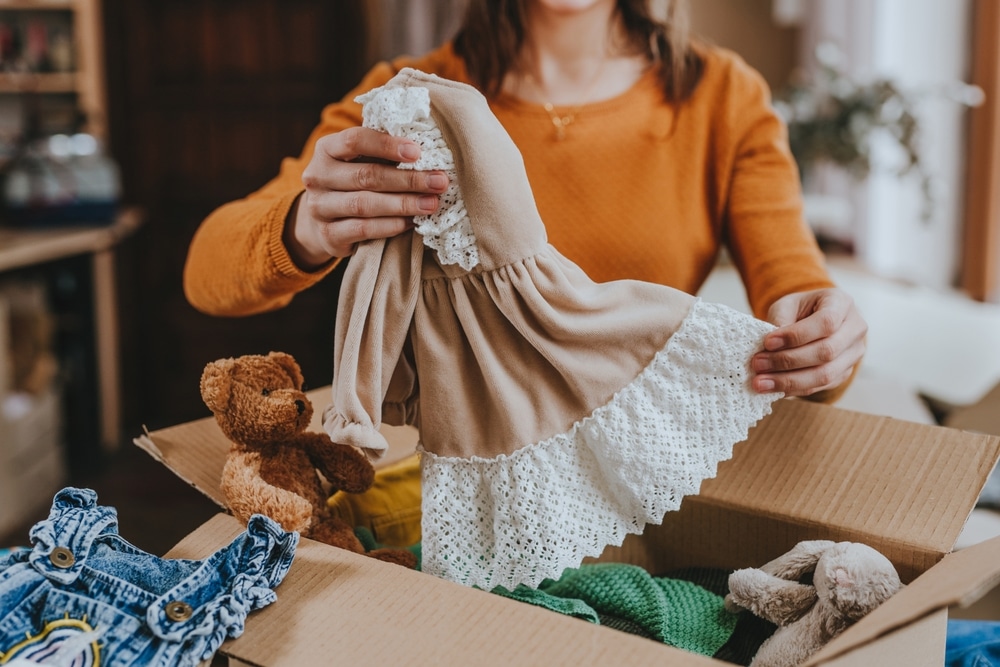
Dr. Steelman encourages buying infant and children’s clothing secondhand: “Once you wash it in your laundry detergent, it’s entirely clean and safe for your child. Kids outgrow clothes rapidly, and there’s a vast array of affordable, quality secondhand clothing on the market. We also generate over 11 million tons of clothing waste that ends up in landfills every year.”
That said, not all secondhand clothing is created equal. Sachse suggests two methods for smart shopping: “First, become acquainted with brands known for their quality and ethical production. Second, if shopping in person, it’s easier to evaluate quality closely. Look for signs like misaligned patterns, fabric pulling, or loose threads when inspecting garments.”
For larger items like strollers and high chairs, Dr. Steelman advises caution with anything featuring foam padding that isn’t removable or washable, “as there may be hidden mold or pests.”
Your secondhand safety checklist
Prior to buying any used baby items, Dr. Steelman says you should assess for “any visible structural damage (including loose buttons or beads) and ensure that every part is accessible for cleaning inside and out.” Always check recalls.gov and confirm that the item meets current safety regulations.
Sachse adds that fabric content is crucial for durability: “Look for pieces made from 95% or more of a single fiber—ideally a natural one—since these materials generally wear better.”
The bottom line
“Whether you’re buying new or secondhand, the overarching principle remains consistent: fewer, better pieces,” Sachse advises. “Simplify, steer clear of trend-driven fashions, and select clothing designed for longevity.”
Reflecting on twenty years of parenting experience, I wish I could tell my younger self that the guilt over not purchasing everything new was unnecessary. The true wisdom lies in reusing, repurposing, and resisting the belief that brand-new items are the sole option for keeping my baby safe.
Your children don’t need new items; they require safety, cleanliness, and love. The rest is simply marketing.