














Key takeaways for caregivers
- Parents have an impact on their children’s beliefs about the world.
- Believing that the world is good, safe, and enticing is related to better mental health, so these are beliefs parents should foster.
- Providing a warm, loving home environment encourages young people’s belief that the world is good, safe, and enticing.
- Giving children love and affection is something that most parents can accomplish.
This piece is based on research originally published in Lansford, J. E., Gorla, L., Rothenberg, W. A., Bornstein, M. H., Chang, L., Clifton, J. D. W., Deater-Deckard, K., Di Giunta, L., Dodge, K. A., Gurdal, S., Junla, D., Oburu, P., Pastorelli, C., Skinner, A. T., Sorbring, E., Steinberg, L., Tirado, L. M. U., Yotanyamaneewong, S., Alampay, L. P., . . . Bacchini, D. (2025). Predictors of young adults’ primal world beliefs in eight countries. Child Development, 96(4), 1260–1273.
Individuals develop a sense of the nature of the world in which they live
People tend to carry their own pictures of the world – whether it is welcoming, threatening, predictable, or something else. By adulthood, these primal world beliefs (or primals for short) are as stable as personality traits. They are also strongly related to aspects of adults’ mental health, including depression, life satisfaction, and optimism.
But we know little about how these beliefs develop. In a recent study of children around the world, my colleagues and I sought a deeper understanding of how adults come to hold these beliefs that are so critical to their functioning in the world. In our work, we focused on the role of adults’ experiences during childhood and adolescence.
What experiences might help shape people’s beliefs about the world?
Children and adolescents grow up in families, neighborhoods, and cultural contexts that may affect their beliefs about the world. For example:
- If children grow up in a dangerous neighborhood, they might come to believe that the world as a whole is dangerous, while children in safer neighborhoods might believe the world is generally safe.
- If children grow up in an affluent family, they might come to believe more strongly that the world is a more abundant place than do children who grow up with fewer material resources.
- If children grow up in a country with longer average life expectancy, they might come to believe that the world is safer than do children in countries with shorter average life expectancy.
To our knowledge, our longitudinal study is the first to examine how a range of experiences during childhood and adolescence relates to their beliefs about the world in early adulthood.
How childhood shapes world beliefs: Insights from families across eight countries
We recruited 1,215 children and their mothers and fathers through schools in eight countries (Colombia, Italy, Jordan, Kenya, Philippines, Sweden, Thailand, and the United States). The communities represented a diverse array of ethnicities and cultural groups, wealth, health statuses, religious affiliations, and cultural tendencies (e.g., individualism versus collectivism).
Most families included a mother and a father living together with their biological son or daughter. At the start of the study, the children were between 7 and 11 years old.
Yearly insights into children’s and parents’ experiences in their families and neighborhoods
Each year for 13 years, we interviewed the children and their parents in the predominant local language. We collected information about socioeconomic status (parents’ education and household income).
To address other experiences that might relate to the development of primal world beliefs, we asked participants to indicate how much they agreed with statements about relevant topics, such as:
- Neighborhood danger (e.g., “My neighborhood is a dangerous place to live”);
- Parental warmth (how much a parent accepts, cares about, and supports their child, e.g., “My mother/father makes it easy for me to confide in her/him”);
- Harsh parenting (use of physical or verbal aggression, e.g., hitting, slapping, or yelling at the child);
- Psychological control (parents’ efforts to shape children’s thoughts and emotions, e.g., “My parents tell me that their ideas are correct and that I should not question them”);
- Autonomy granting (parents’ encouragement of children’s pursuit of their own paths, e.g., “My parents let me make my own plans for things I want to do”).
Within families, mothers’ and fathers’ responses tended to be very similar, so we combined them in our analyses.
When the children became adults: How did they view the world?
When the children in our study were 22 years old, on average, they completed a questionnaire about their world beliefs by indicating their level of agreement with statements about the world. The statements expressed impressions of the world on five dimensions:
- Good (versus bad): “Most things in the world are good”;
- Safe (versus dangerous): “I tend to see the world as pretty safe”;
- Enticing (versus dull): “No matter where we are, incredible beauty is always around us”;
- Progressing (versus declining): “Though the world has problems, on the whole things are definitely improving”; and
- Abundant (versus barren): “The world is an abundant place with tons and tons to offer.”
Finding 1: Perceived parental warmth during childhood and adolescence predicted young adults’ beliefs that the world is good, safe, and enticing
Children’s reports of parental warmth, which involves parents making their children feel loved and accepted, were related years later to those young adults’ belief that the world is good (rather than bad), safe (rather than dangerous), and enticing (rather than dull). Parental warmth was uniquely important in this way.

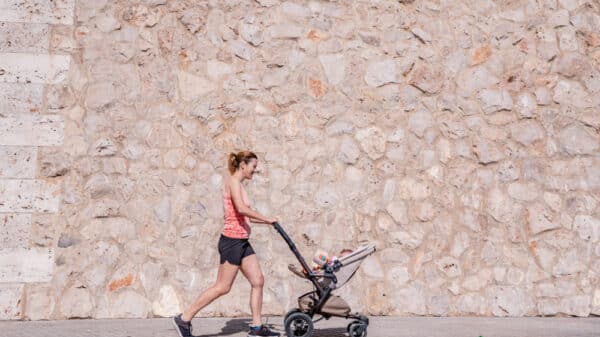
Photo by Ketut Subiyanto on Pexels
Finding 2: Not all experiences in childhood and adolescence directly predicted young adults’ beliefs about the world
The only other reported experience from childhood and adolescence that predicted any later world belief was the youth’s perspective of their parents’ autonomy granting. Individuals who said their parents granted them more autonomy in their youth tended to report a stronger belief that the world is enticing.
Overall, contrary to our expectations, most experiences in childhood and adolescence that we studied did not directly predict young adults’ beliefs about the world.
For example, children who grew up in more dangerous neighborhoods did not necessarily come to believe that the world is dangerous. In fact, neighborhood danger, family socioeconomic status, harsh parenting, and psychological control reported at ages 8 to 16 by children and their parents were not significantly related to any measured beliefs about the world when the children were young adults.
Finding 3: Some adult beliefs about the world were not predicted by any of the reported experiences during youth
Furthermore, none of the youth’s experiences we studied predicted their beliefs as adults about the world as progressing (rather than declining) or abundant (rather than barren). Experiences of parental warmth and, to a lesser extent, autonomy granting, predicted only the other specific types of later primal world beliefs: good, safe, or enticing.
Conclusions
Our findings provide valuable insights into how adults’ world beliefs can and cannot be predicted by experiences during childhood and youth. While intuitive assumptions can suggest that family socioeconomic status or exposure to violence, for example, shape individuals’ views of the world, such assumptions can be wrong.
It is important to dig deeper to better understand individuals’ development of world beliefs, and how caregivers and communities can provide support along the way.
Exploring world beliefs during youth
Researchers have a much deeper understanding of adults’ beliefs about the world than of children’s and adolescents’ beliefs about the world. Thus, researchers may benefit from studying primal world beliefs during childhood and adolescence rather than only when individuals reach adulthood. They could also examine how world beliefs evolve over the lifespan.
Children and adolescents might describe the world differently from adults, and even if both youth and adults describe the world as good, their conceptualizations of what makes the world good are likely to differ.
Such work will help us better understand the relations between experiences during youth and the development of primal world beliefs. Researchers might also help identify whether certain experiences cause certain beliefs or simply tend to co-exist.
Caregivers can promote positive world beliefs regardless of environmental challenges
Our results should comfort anyone concerned about the negative consequences of challenging family circumstances during childhood and youth, such as living in an underprivileged community. Raising children in a safe neighborhood and providing them with economic security are important for many other reasons, but our findings show that youth can still grow up to believe that the world is a good, safe, and enticing place even if they have been raised in a dangerous neighborhood or with material hardships.

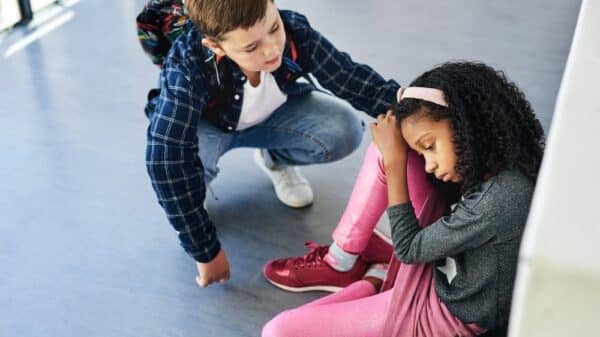
Photo by Thomas Benedetti on Pexels
These outcomes might be the result of the significant support parents and other caregivers provide by helping children reflect on their experiences. This support can provide a buffer that protects youth from potential harm.
More specifically, parental warmth may play a unique and important role in this dynamic: In our study, the degree to which children felt accepted, cared for, and supported was strongly related to multiple later positive beliefs about the world. Believing that the world is good, safe, and enticing (as opposed to bad, dangerous, and dull) relates strongly to more optimal mental health and life satisfaction.
Our results also offer a hopeful message for parents and other caregivers. Through natural skill or supportive intervention, caregivers can focus on providing their children with warmth and support. Although many other aspects of the environment are difficult to control, fostering warm and loving relationships with their children is something caregivers can do that can pay important dividends for children’s development.