


















Pets provide children with extraordinary experiences and lessons that shape their lives in profound ways.
These creatures, regardless of their type or size, bring joy, teach responsibility, and create an unbreakable bond of companionship that many families cherish. Embracing a pet at home can cultivate remarkable emotional connections among family members.
Many kids grow up with pets, and studies show that the majority of children interact with animals during their formative years, according to Gail F. Melson, PhD, a professor emeritus at Purdue University and author of Why the Wild Things Are: Animals in the Lives of Children.
My childhood was graced with furry friends accompanying me on countless adventures, and my wife’s upbringing on a farm solidified our desire to enrich our daughter Natalie’s life with animal companionship.
Witnessing her enthusiastic interactions with pets has brought us immense joy.
Natalie’s natural excitement for animals has expanded our family to include a German shepherd, three cats, a freshwater aquarium, and even mail-order Sea-Monkeys.
Living on 4 1/2 acres in the Pennsylvania woods, we frequently encounter local wildlife like turtles, frogs, and ducks, providing her with endless entertainment.
While we anticipated pets would teach her responsibility and empathy, we’ve discovered their impact reaches much further.
The presence of animals in our home has positively influenced her emotional, cognitive, social, and physical development.
The benefits of pet ownership are well-documented and supported by research.
Here are six proven ways pets help children thrive, enriched by insights from experts in child development.
1. Pets Can Help With Learning
Instead of book clubs, Natalie enjoys reading sessions with her cats.
You can often find her nestled in bed, reading aloud, sharing pictures, and asking them questions to engage them in the story.
Dr. Mary Renck Jalongo, PhD, a retired educator, highlights that the presence of therapy animals in schools supports various learning styles.
Pets offer a relaxed atmosphere for children who may struggle with traditional learning.
According to Dr. Jalongo, the approach to reading alongside a pet reduces pressure, transforming the experience into a positive adventure.
2. Pets Can Provide Comfort To Kids
Animals serve as reliable sources of comfort for children.
In a study led by Dr. Melson, over 40% of kids mentioned turning to pets when feeling sad or anxious.
Parents reported that these children exhibited lower levels of anxiety and withdrawal.
A pet conversation starter can help kids feel connected with peers.
3. Pets Can Encourage Nurturing
Dr. Melson’s research explored how pets help children develop their ability to care for others.
She indicates that nurturing is not an innate characteristic formed solely from childhood experiences.
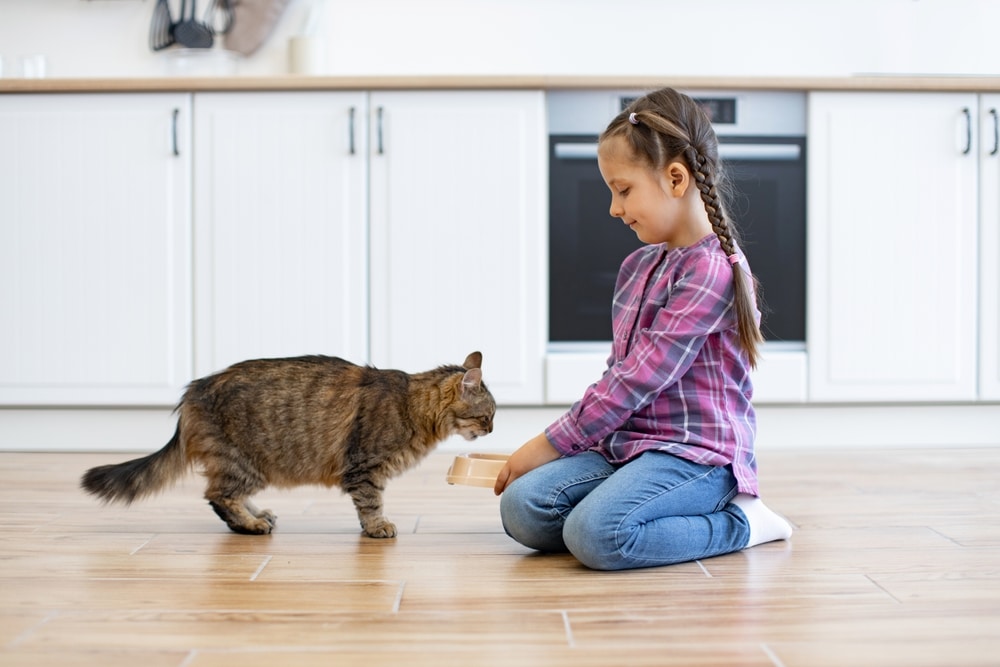
Young children require opportunities to practice caregiving, and pets provide that essential context.
While adults often care for siblings in other cultures, American children typically do not.
Her studies revealed that children with pets spent more time caring for them than those without siblings.
These pet-care moments help lay the groundwork for effective parenting skills later in life.
4. Pets Can Keep Kids Healthy
While I might hope there’s a connection between a low number of ear infections and having three cats, the science doesn’t back that up.
However, research demonstrates that pets can reduce the development of allergies in children.
Dr. Dennis Ownby’s study tracked children from birth, revealing that those exposed to multiple pets were less likely to develop common allergies by the age of seven.
Earlier studies showed that kids with pets had fewer reactions to both indoor and outdoor allergens.
Furthermore, recent research indicates a strong correlation between the number of pets and the likelihood of allergic conditions.
Dr. Ownby theorizes that interactions between children and animals may expose them to various bacteria, potentially influencing immune system responses.
5. Pets Can Build Self-Esteem
A 2017 literature review emphasizes that pets contribute to children’s self-esteem and emotional health, offering a sense of companionship that alleviates loneliness.
6. Pets Can Build Family Bonds
An unexpected joy from pet ownership is the strengthening of family ties.
Many parents are surprised when children express the sentiment that pets are integral family members.
Pets encourage shared activities like walks, grooming, and playtime, creating lasting memories and collective experiences.
Even the simple act of sharing moments with pets can slow down the rapid pace of life and remind families of what truly matters.
Caring for pets creates valuable opportunities for families to bond and grow together in today’s busy world.