



















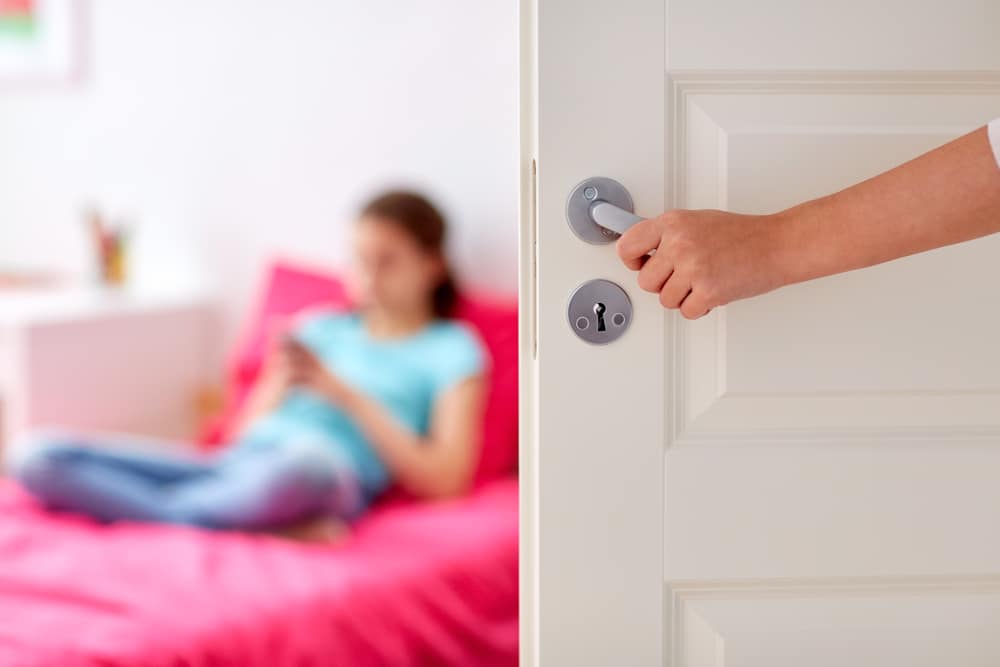
Creating personal space for children, especially teenagers, is vital to their development and sense of independence. It’s crucial for them to have a sanctuary where they can retreat from family interactions, whether or not they have their own room. It empowers them to establish boundaries and encourages emotional growth.
Recently, a thoughtful mom took to Reddit to explore a hot topic in parenting: should teens have locks on their bedroom doors?
This mother, navigating her first experience as a homeowner, wanted to foster her daughter’s sense of privacy by installing locks on the bedroom doors. Reflecting on her childhood as the eldest of five, she remarked, “Without a lock, my siblings would invade my space whenever they felt like it.” This question had her pondering whether her choice was acceptable or too permissive.
Interestingly, her ex-husband disagreed strongly. He expressed concern, claiming that her decision put their daughter at risk. As she pointed out, this was not the first home in which they had locks on bedroom doors. His perspective seemed more influenced by personal issues than by genuine concern for their daughter’s safety.
The mother further noted that her daughter is a trustworthy honor roll student, completely devoid of any troubling behavior that would suggest she needed her parents to monitor her movements. Furthermore, she reassured others that she could easily access her daughter’s room whenever necessary.
This reflects a common fear among parents — the notion that providing a lock invites unwanted behavior. But many parents chimed in on Reddit, asserting that such locks can be both a privilege and a tool for trust. They pointed out that with privileges come responsibilities; if trust is broken, it can be revoked.
One commenter shared, “We always had locks until trust was broken. Then the lock privilege disappeared.” Another stated, “Everyone deserves privacy, especially teens navigating their own identities.” Their comments highlight how some parents believe privacy can foster a sense of security.
Of course, there were dissenting voices. Some argued against the need for locks altogether, suggesting that a closed door suffices. “In a supportive home, a lock shouldn’t be necessary,” stated one commenter, pointing to the importance of knocking and respect for privacy. Yet, this perspective overlooks the reality of family dynamics in different households.
Having a lock could be a comfort for some teens. For instance, one commenter, who grew up with younger siblings, vividly recalled the invasiveness of family members barging in without warning. “It’s normal for teens to want that boundary to feel safe in their own rooms,” they said, emphasizing the importance of having a secure space.
While some families might not prioritize locks, others can find value in their presence. A lock can represent a teen’s need for privacy, especially during sensitive moments in their lives. If a teenager requests a lock, it’s an opportunity for dialogue. Parents can explore the reasons behind that desire. Is it simply to keep siblings out? Or perhaps it’s about asserting their independence?
As parents, it’s essential to approach this issue with an open heart. Engaging in conversations about privacy can strengthen the bond between you and your teen. Ultimately, the goal is to establish trust and ensure that home remains a safe haven for exploration and self-discovery.